terriloui

Terri Long – Telling lost stories with found objects.

Tag: wabi-sabi

Collecting and cleaning on the shore, Andy Goldsworthy style

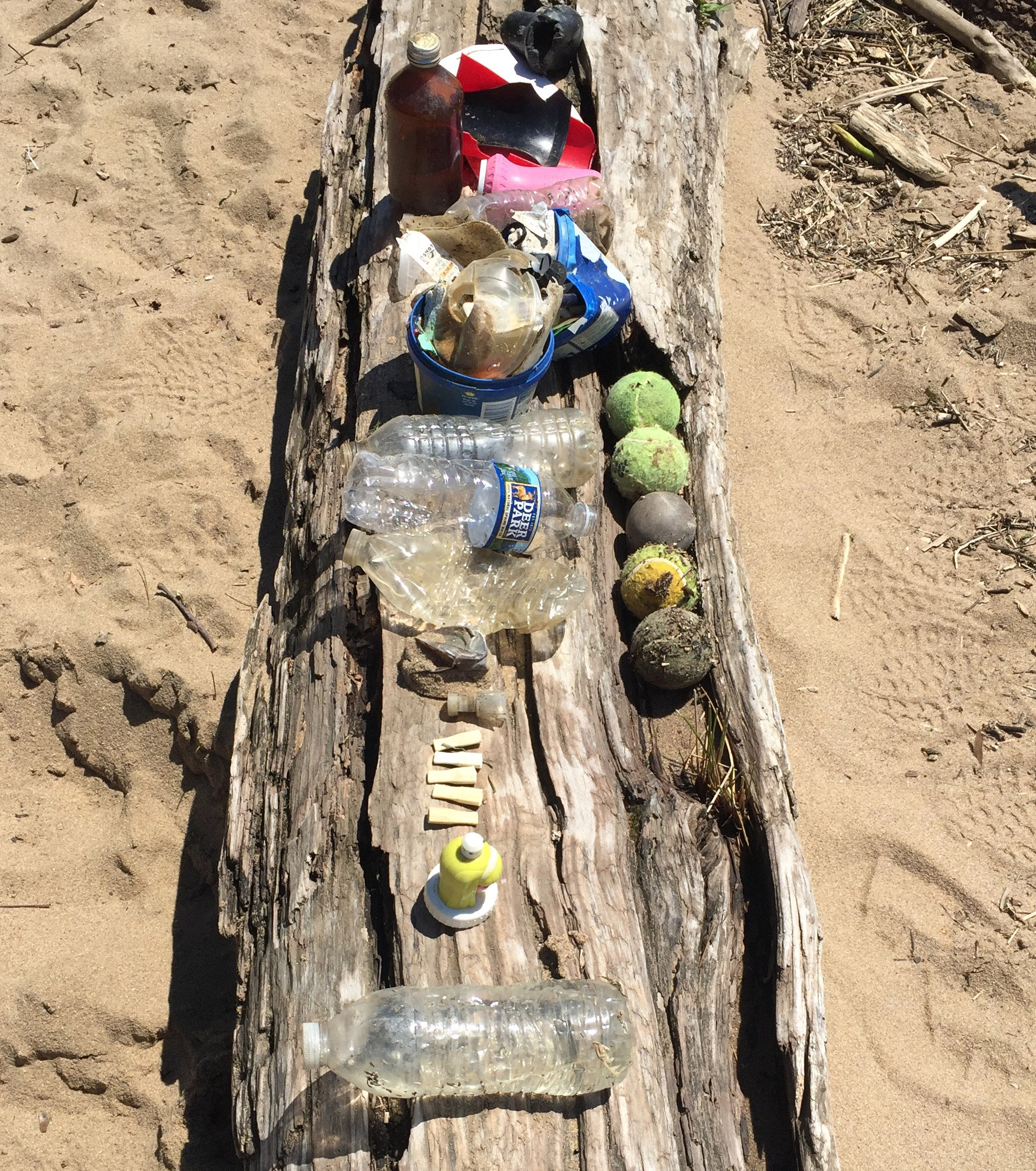
I tend to pause when I see trash and discarded objects out of place, especially when they interfere with a natural setting. And so it was that I spent a May morning rearranging 50 feet of shoreline on the Potomac River to get it just so.

My husband, Barry the boatbuilder was sailing at Leesylvania State Park and invited me to tag along. As he crewed in a Lightning regatta, I stayed ashore, rode my bike, cruised the fishing pier, and landed at the shore. I picked up the most of the true trash — shredded pieces of styrofoam, plastic water bottles, liquor bottles, bait buckets, tennis balls and plastic cigarette tips — and assembled them on a sun-bleached tree trunk moored in the sand. Then I set to work, with Andy Goldsworthy like attention, to make a little art with the abundant natural materials at hand.

With much to see on the littoral beach, I settled mostly on the black walnuts, with their beautiful, warm brown and tan coloring, worn ridges and varying sizes. I stooped, gathered acorns and snails shells, too, and arranged a satisfying wabi sabi assembly, orderly yet disorderly.

Before leaving, I stood in the shade of the tree line to watch and see if anyone else would notice the ephemeral collection. I took my leave and imagined how the incoming tide would soon be reordering it all, cleaning up after me.

Salvaging Random Row Books

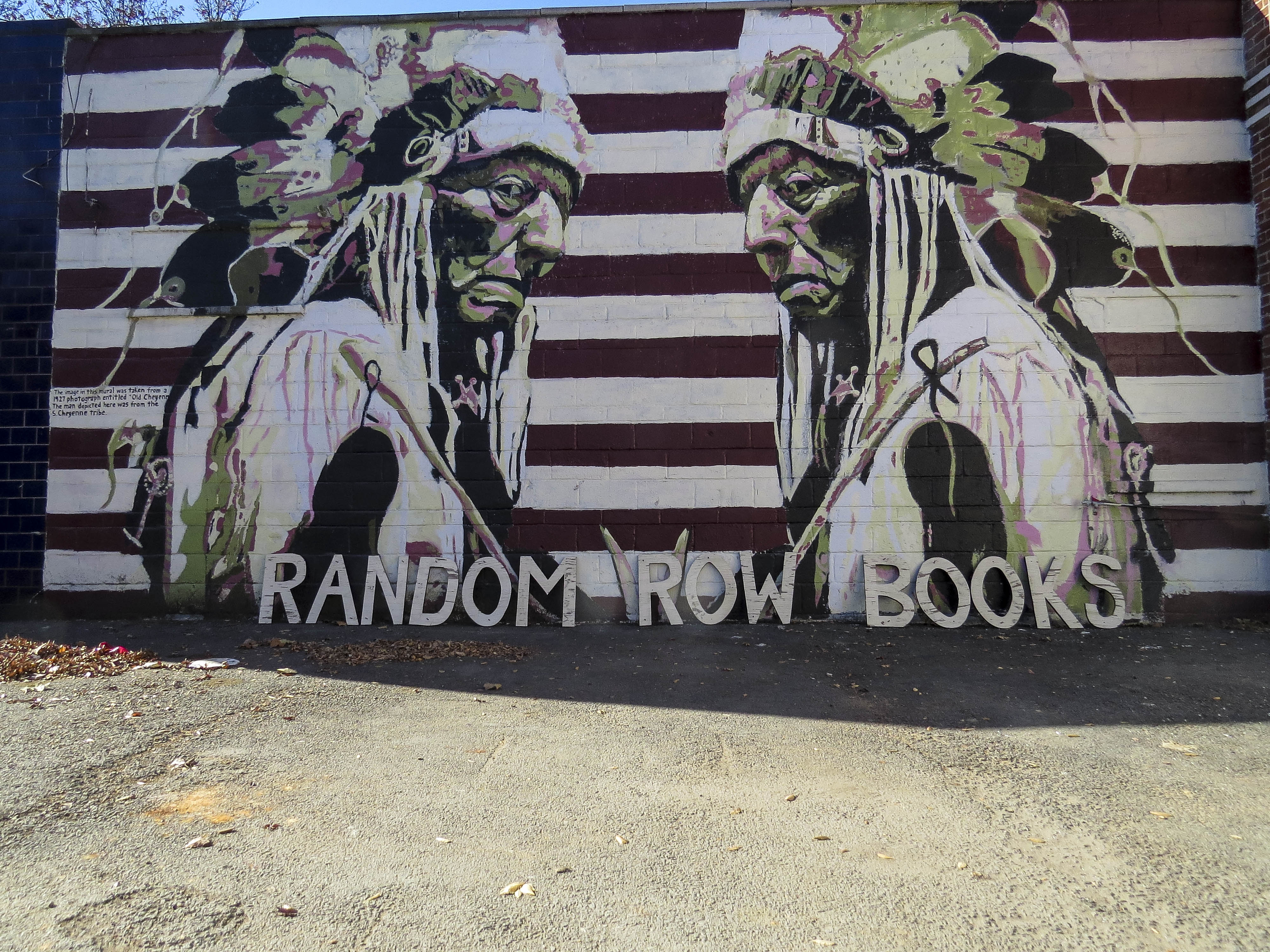
Mural and letters.

Mural and letters.

Letters at home.

Letters at home.

Thief apprehended, kitchen implement returned.

Thief apprehended, kitchen implement returned.


I tend to set my sights on the ephemeral, worn out and all-things-about-to-disappear. Usually, I come up just shy of the actual disappearance, cutting it extremely close or missing it. In 2013, I didn’t miss, I scored with five vowels and nine hardy consonants, salvaging these letters for some future, who-knows-what usage.

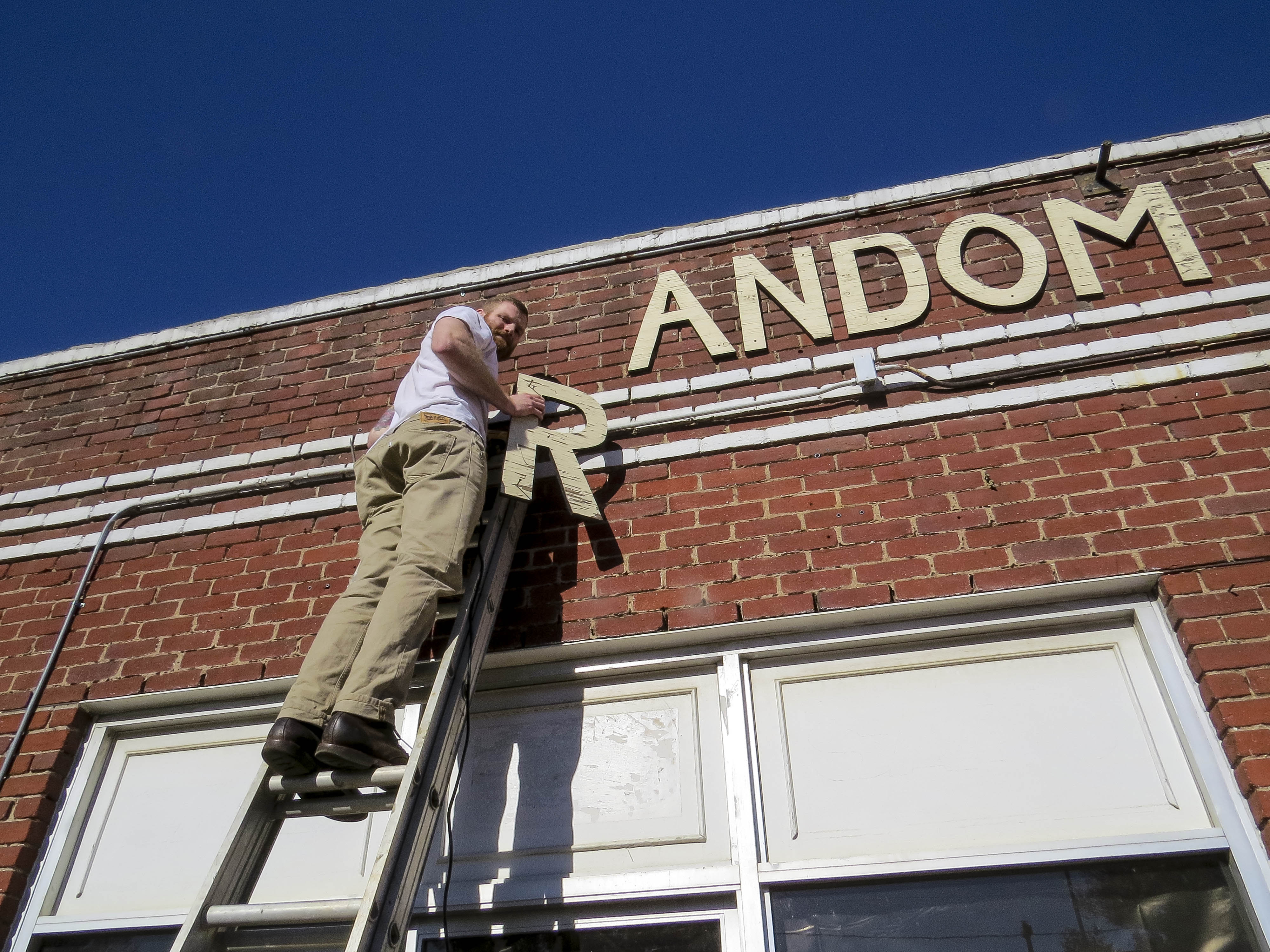
A small, independent, used bookstore and community art space I loved in Charlottesville announced it was closing, heralding some changes to come on West Main Street. Ryan Deramus, the stalwart owner of Random Row Books* sold off his inventory, tipped his hat and cycled away. The building was slated for demolition and a hotel to be built on that footprint. Feeling a bit like the Lorax, I climbed on the tree stump out front. I wanted to claim some vestige of what soon wouldn’t be, something familiar, some token: the sans-serif letters. Ryan told me I was welcome to the signage, relating how he’d found scrap wood in the building, handmade the 14 letters, painted and mounted them. I struck a deal with the building’s owner and site project manager to get in-and-out on the Sunday before the No Trespassing signs appeared, and I bartered with a co-worker (another Ryan) who is good on ladders to get the job done.

Ryan E. helps with salvage.

Ryan E. helps with salvage.

Ryan E. with W. Better this guy wielding the power tools than me.

Ryan E. with W (or maybe upside down M?)

I’ve made several trips to the site as the former building became rubble and the new one ascends. The Cheyenne mural seems to cast it’s own eye and mute opinion on the goings on.

In 2014, I took the letters out on the town. We visited with artist Simon Draper and his Habitat for Artists residency at The Bridge. His habitat, made of recycled materials, was constructed on site, then deconstructed to spend a weekend at the Main Street Market and now lives at the Ix Art Park in Charlottesville.

The white paint on the letters is chipping in the expected wabi-sabi way after six years of weather. We continue to have wordsmith and anagram fun out back by our shed. My typographer’s eye tells me I need to fix the kerning, too tight propped on the ladder as is. But I can fix that. It’s OK man.

(*Do read the wonderful backstory on the bookstore and mural when you have a chance, I admit I barely did it justice. We bought books, saw live bands, theatre and picked up our veggie CSA there back in the day. Joni Mitchell knows… they paved paradise, put up a parking lot.)

Divining the discarded.

Actually, these are Barry’s words. He is the writer in the household, and when queried if he had anything to say about my work, he gifted me this:

I’ve been watching Terri collect things and arrange them together for years, but only recently have I begun to understand why and what they mean to her. It’s this passing of the physical world that she captures in her collections, and especially the passing of the physicality – the lives, the people and the artifacts themselves.

Like an archeologist of the not quite modern, the almost gone, she rescues pieces of everyday life just before it vanishes. The way a piece of jawbone or a bronze pin pulled from the ground can reveal the story of a once thriving ancient civilization, she finds in the recently discarded – things once highly valued and no longer – signs of a life that is just now passing.

Divining the discarded.

She sees stories in the insignificant. Lagging somewhat behind, she follows in our tracks after we pass, reading our footprints, picking up the things we leave behind, giving them a turn in the sunlight, then puts them in her pocket to take home.

For the past several years her attention has turned to books. We have just passed through the golden age of book publishing, when books were cheaper and more plentiful than at any other time in history. But that time is almost over. Once valued as prized possessions, books are now discarded in great stacks of dried wood pulp, piled near the curb like leaves for composting. The more sentimental owners, still attached to their old friends, drop them at yard sales or Goodwill stores, or in recycling boxes, a last chance for temporary salvation on their way to the dump.

Terri collects these fleeting artifacts, too, and arranges their pieces and parts into patterns to tell our stories. A mosaic of textbook covers recalls the time we rejoiced when our class was chosen to receive new textbooks. Their covers, unblemished, crackled when opened to proudly write our names first as owner and caretaker of this container and conveyor of knowledge. There are odd how-to books from the ‘50s – How to Write Good Social Letters, and Better Rural Living, and Sportsmanlike Driving – when our parents saw the world differently from us. Each cover, including the book itself, a microcosm of how we used to think.

But what I am reminded of, when looking at Terri’s work, is the imminent mortality of it all. Her presentation is spare, without artifice, her own personality almost frustratingly withheld from view. No more than creatively arranged samples of a most recent past – simple, unadorned, laid out in grids like specimen drawers in the basement of a museum. For a sensitive observer, they create the unmistakable feeling of wabi-sabi, the Japanese esthetic of transience and impermanence. These recent works seem to say in a soft voice “Books are not long for this world, look at what they were while you still can.”