terriloui

Terri Long – Telling lost stories with found objects.

Tag: textbooks

Lost and Found at PVCC Sept. 18 – Nov. 4, 2015


PostcardSnap1

PostcardSnap2


Excited to be part of a two person show opening in Charlottesville on Friday, September 18th. Recent hand surgery has made for a challenging summer and for preparing works, but all is well and I’m psyched to deliver the work in just a few days.

Materials? Discarded library books and ephemera, old text book covers, marbled end papers, leather bindings, one feather, one tiger and quite a few butterflies.

More to come.

Hanging out

We hung the show late last night. The weather never cooperated, steady cold rain all day and night. None of us wanted to load and unload cars, but eventually we capitulated and met at 7:30pm to install the show at The Bridge.

This is a two person show and I share the walls with Joanna Mullen. She brought two of her Art Box framing crew friends along. Delightful ladies who had the wherewithall to fetch bagels from Bodo’s to help us keep our wits.

Opening reception is Friday 3/1 from 6 to 8pm, catching the early and late First Friday gallery crawlers, and is generally a great scene. Now for the sartorial concern, what am I going to wear?

Pinched reflection in the plate glass window of The Bridge.

Pinched reflection in the plate glass window of The Bridge.

Joanna, Amanda and Lana are framing queens. Much jocularity and banter kept me thoroughly entertained.

Joanna, Amanda and Lana are framing queens. Much jocularity and banter kept me thoroughly entertained.

Who doesn't like a good perspective shot.

Who doesn’t like a good perspective shot.

Bookbags

Remember the bookbags you carried back in elementary school? If you were lucky, Mom took you back-to-school shopping for slacks, shoes and a new bookbag to hold all those textbooks. I can’t remember what my last bag looked like. But when I started playing around with discarded textbooks, I knew what my next bookbag could look like.

Long before I bought shoulder bags made from a Guatemalan coffee sack and knitted plastic grocery bags, and way before upcycling or DIY were terms I’d actually heard of, I started making book purses.

Happy to report there are several, new-to-me book purses in production. Here are a few from the archives.

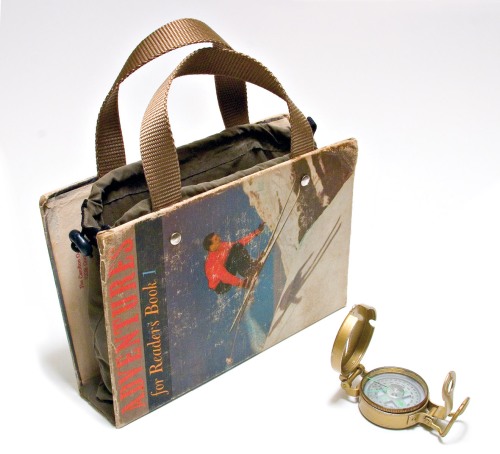
15-Adventure

Adventures for Readers Book 1 bag, 2006.
Khaki web belt for the straps, liner is an old pair of cargo parachute pants, toggles included.

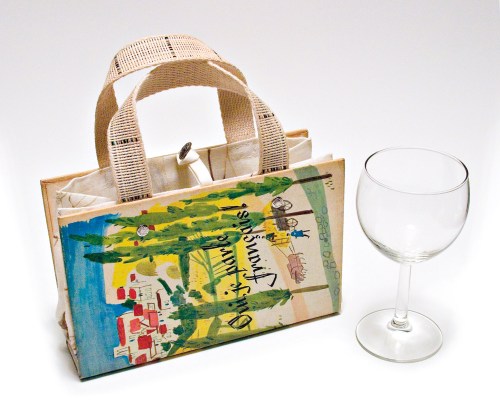
14-OuiFrancais

Oui je parle Francais! book bag, 2006
Cotton linen dress for liner, ribbon and button closure, cotton belt for handles.

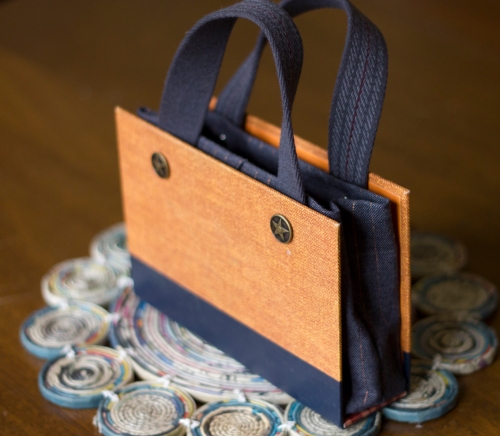
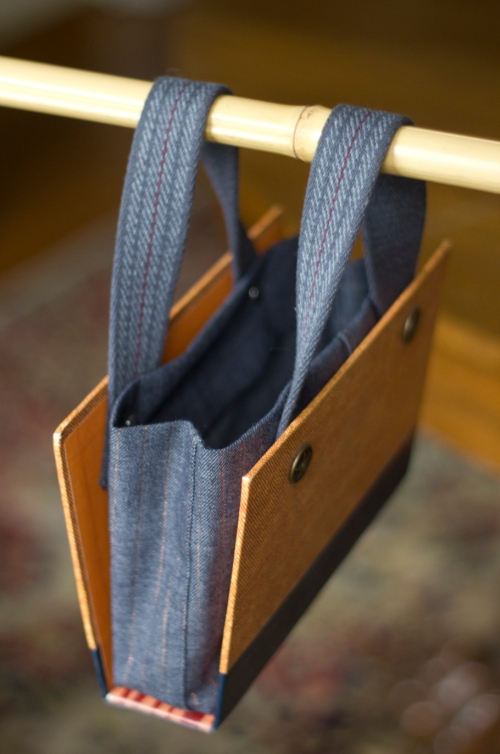
OrangeBookPurse02

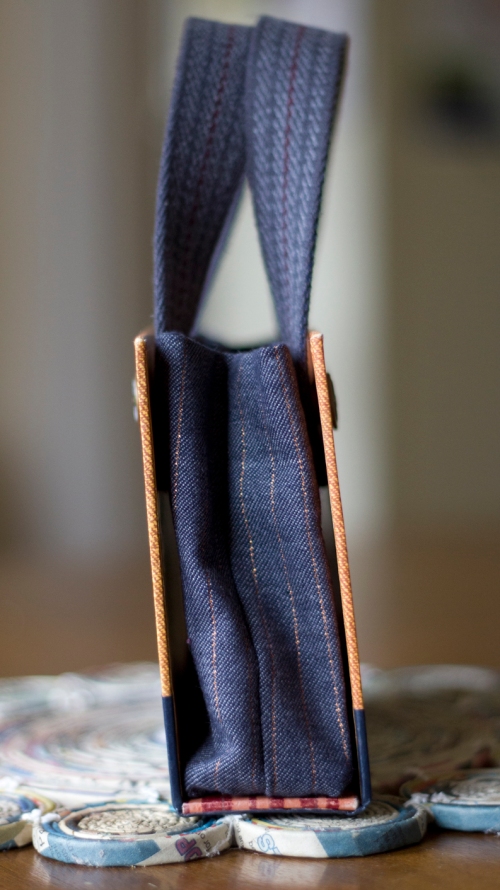
Reader’s Digest Condensed Book purse, 2010
Sassy blue jeans liner, Dad’s casual friday belt for handles, lone star rivets.

OrangeBookPurse03

OrangeBookPurse01

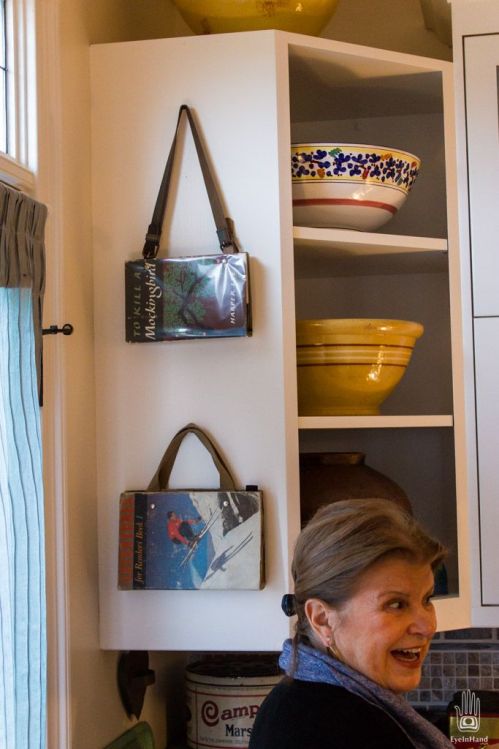
Pie-BookPurses

Pie’s kitchen, Christmas 2012. Photo by Barry Long.
Top, To Kill a Mockingbird book bag with dust jacket, 2010. Belt and liner from vintage secretary’s skirt.
Adventures for Readers Book 1 bag, 2006, bottom.

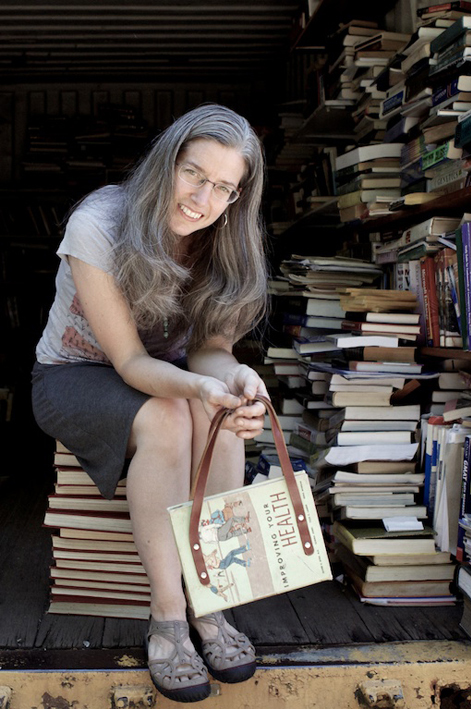
BookBin-JR1

Hanging out in the McIntire Book Bin, photo by John Robinson, Summer 2011, http://www.robinsonimagery.com/. Improving Your Health book bag, leather handles.

Terri-Karen-0133

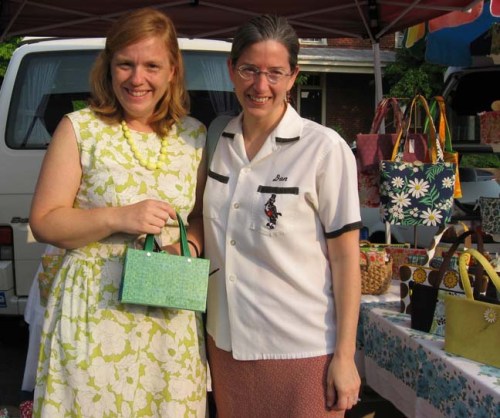
Terri and Karen, Charlottesville City Market, Summer 2007.
Green book bag with green belt handles.

Divining the discarded.

Actually, these are Barry’s words. He is the writer in the household, and when queried if he had anything to say about my work, he gifted me this:

I’ve been watching Terri collect things and arrange them together for years, but only recently have I begun to understand why and what they mean to her. It’s this passing of the physical world that she captures in her collections, and especially the passing of the physicality – the lives, the people and the artifacts themselves.

Like an archeologist of the not quite modern, the almost gone, she rescues pieces of everyday life just before it vanishes. The way a piece of jawbone or a bronze pin pulled from the ground can reveal the story of a once thriving ancient civilization, she finds in the recently discarded – things once highly valued and no longer – signs of a life that is just now passing.

Divining the discarded.

She sees stories in the insignificant. Lagging somewhat behind, she follows in our tracks after we pass, reading our footprints, picking up the things we leave behind, giving them a turn in the sunlight, then puts them in her pocket to take home.

For the past several years her attention has turned to books. We have just passed through the golden age of book publishing, when books were cheaper and more plentiful than at any other time in history. But that time is almost over. Once valued as prized possessions, books are now discarded in great stacks of dried wood pulp, piled near the curb like leaves for composting. The more sentimental owners, still attached to their old friends, drop them at yard sales or Goodwill stores, or in recycling boxes, a last chance for temporary salvation on their way to the dump.

Terri collects these fleeting artifacts, too, and arranges their pieces and parts into patterns to tell our stories. A mosaic of textbook covers recalls the time we rejoiced when our class was chosen to receive new textbooks. Their covers, unblemished, crackled when opened to proudly write our names first as owner and caretaker of this container and conveyor of knowledge. There are odd how-to books from the ‘50s – How to Write Good Social Letters, and Better Rural Living, and Sportsmanlike Driving – when our parents saw the world differently from us. Each cover, including the book itself, a microcosm of how we used to think.

But what I am reminded of, when looking at Terri’s work, is the imminent mortality of it all. Her presentation is spare, without artifice, her own personality almost frustratingly withheld from view. No more than creatively arranged samples of a most recent past – simple, unadorned, laid out in grids like specimen drawers in the basement of a museum. For a sensitive observer, they create the unmistakable feeling of wabi-sabi, the Japanese esthetic of transience and impermanence. These recent works seem to say in a soft voice “Books are not long for this world, look at what they were while you still can.”